Northern lights this winter: where and when to see them
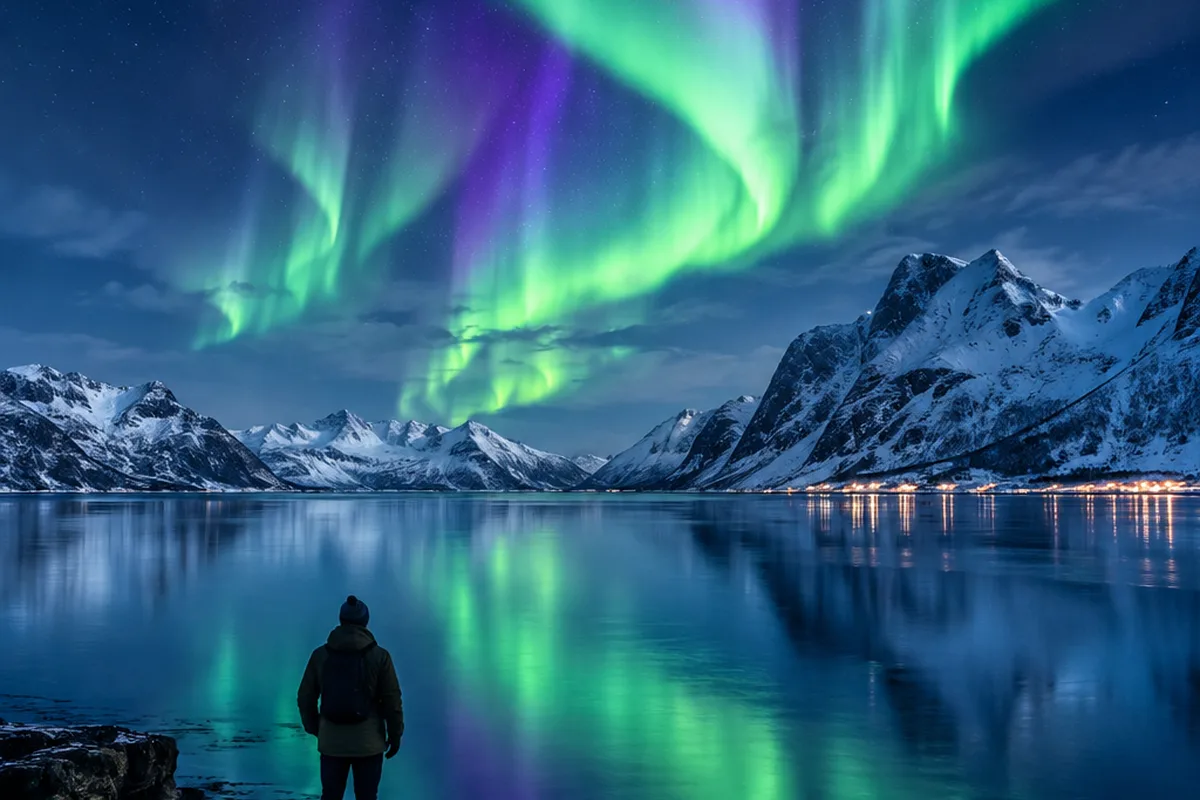
It is eleven at night and you are far from any street light. It is cold, you hop from foot to foot in the snow and all you see are stars. Suddenly a pale band appears on the horizon. It stretches, turns green and starts to ripple like a curtain someone is gently shaking. Then the whole sky is dancing above your head. Seeing the aurora borealis is one of those experiences that leave you speechless. Here is what they are, where and when to see them this winter, how to improve your chances and how to photograph them with your phone.
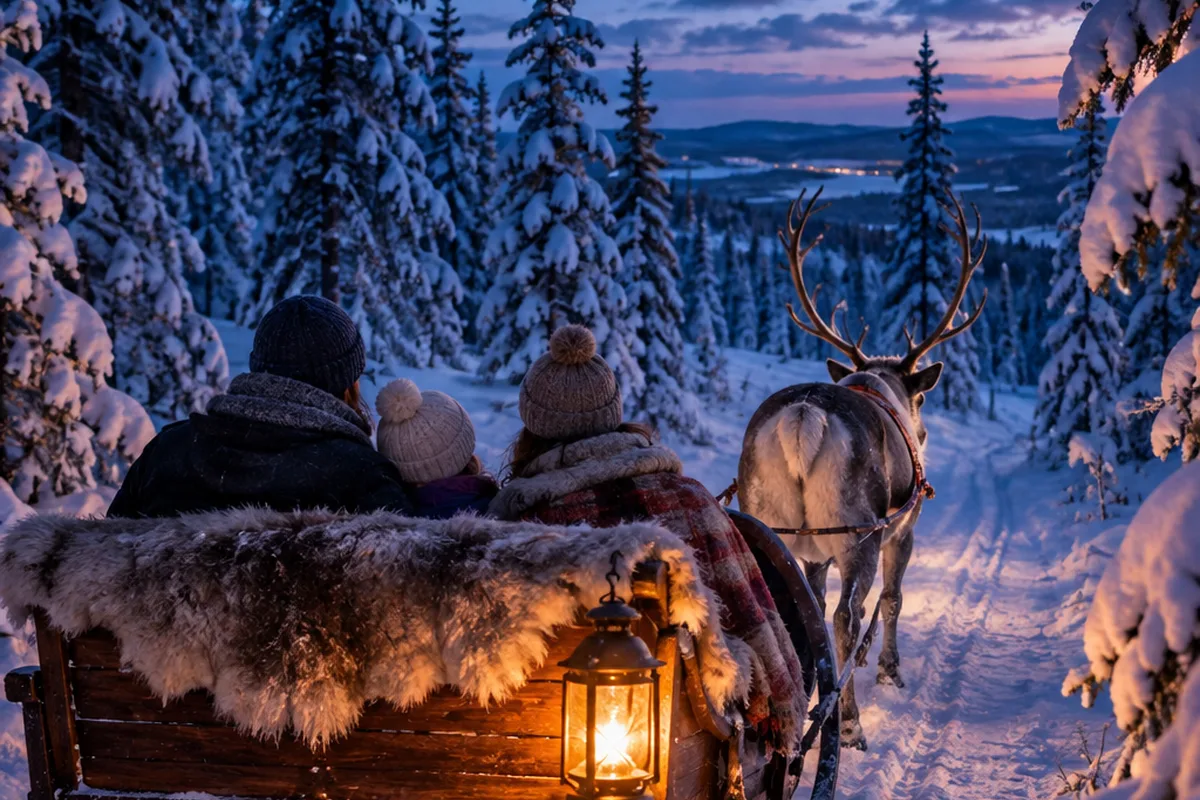
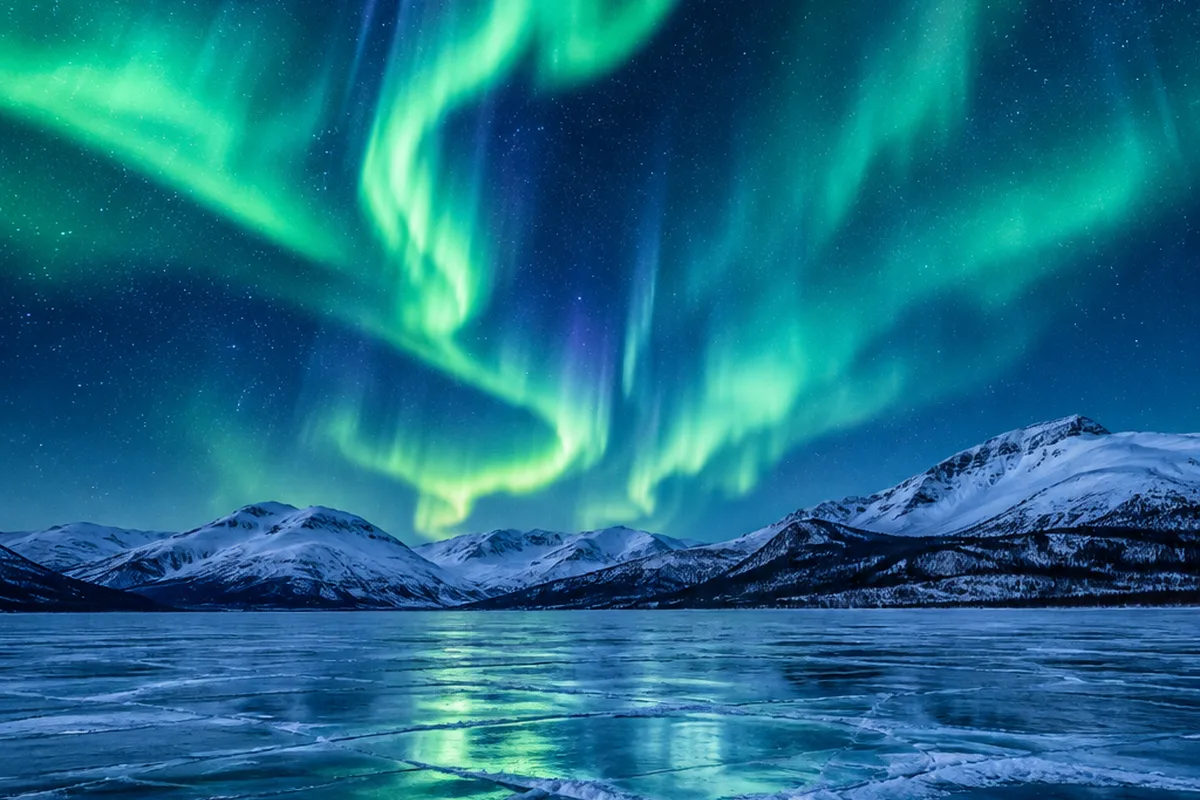
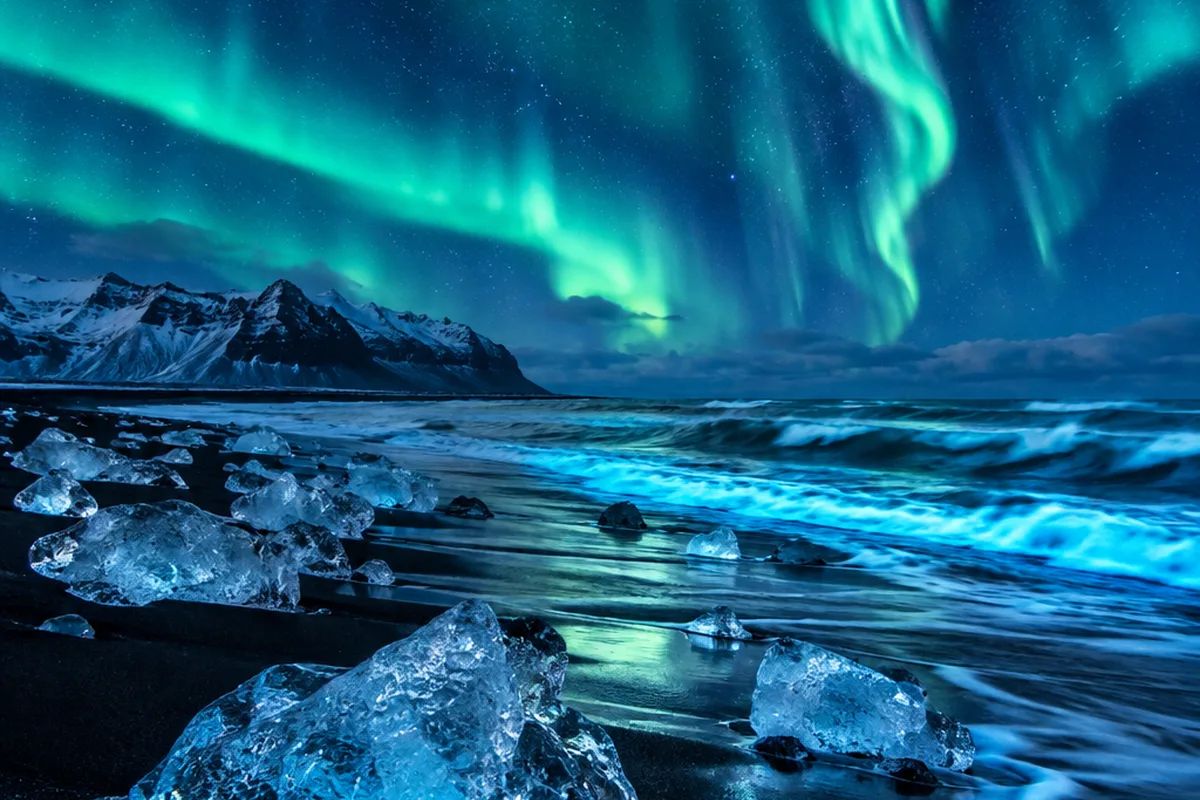
The images in this article are AI-generated.
What the northern lights are
The Sun sends charged particles into space, the solar wind. When they reach Earth, the magnetic field steers them towards the poles and, high in the atmosphere, they collide with oxygen and nitrogen and glow. Green, the most common colour, comes from oxygen; reds and violets appear when activity is stronger. That is why auroras are seen mostly in a ring around the North Pole.
The best places to see the aurora
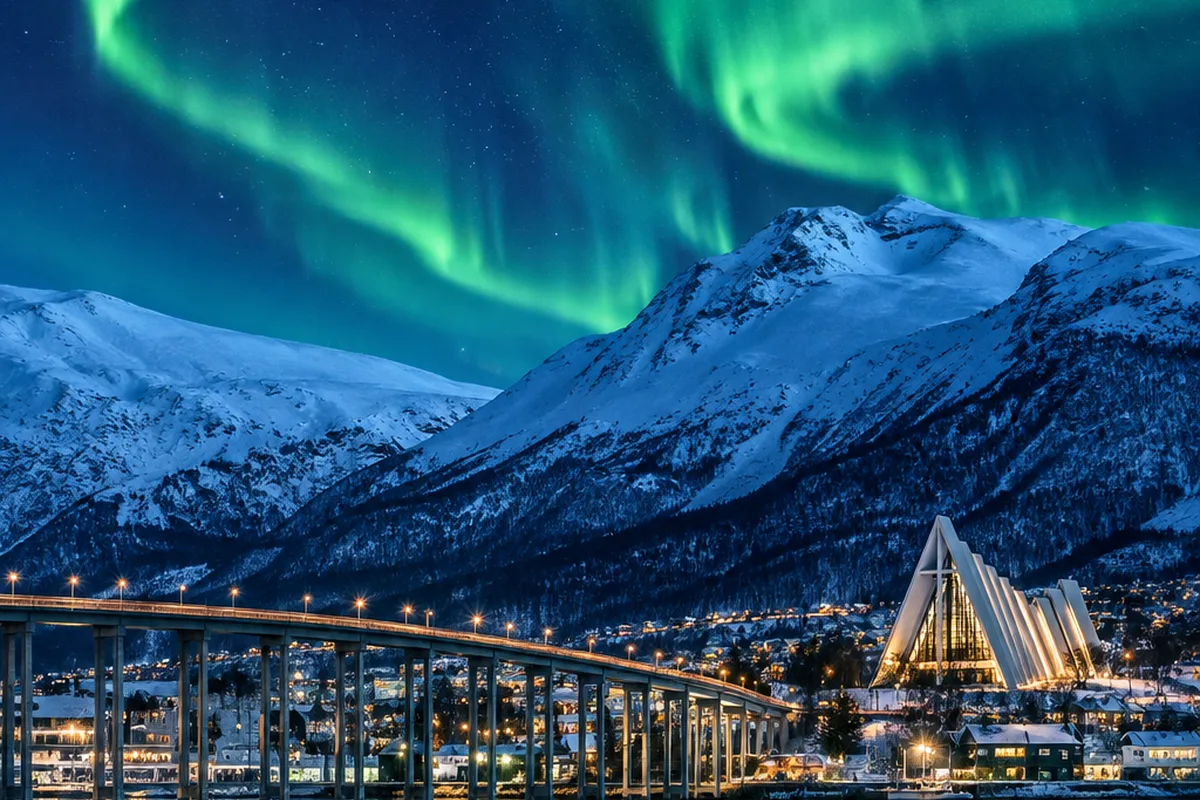
- Tromsø (Norway). A lively city surrounded by fjords and mountains. If it is cloudy, guides drive inland in search of clear skies. An aurora reflected in a fjord is something else.
- Abisko (Sweden). A small village in a national park, known for having clear skies more often than its surroundings thanks to its microclimate.
- Finnish Lapland. Saariselkä, Inari or Levi: endless forests, frozen lakes and glass-roof cabins to watch the aurora from bed.
- Iceland. Waterfalls, lava fields and black-sand beaches as a backdrop. If you get away from Reykjavik's lights, you can be lucky close to the city.
- Northern Canada. The Yukon, for the adventurous, with huge skies and wild nature.
When to see the northern lights
Auroras happen all year round, but you need darkness, and in the far north it barely gets dark in summer. The good season runs roughly from September to March, so November is already in it. The Sun is still in an active phase of its roughly eleven-year cycle, and good activity is expected this winter. Even so, nobody can guarantee you an aurora. Activity tends to peak between 10 pm and 2 am, although it can appear earlier or later.
Five tips to improve your chances
- Stay several nights. With four or five nights in aurora country, your odds go up a lot. This is the golden rule.
- Escape the light. Get away from towns and watch the Moon: with a full moon, faint auroras are harder to see.
- Check the forecast. Look at expected activity and, above all, cloud cover. No clear sky, no aurora.
- Go out with a guide at least once. They know the spots, move if it is cloudy and many take photos for you.
- Don't wait in the hotel. Go out, walk and look north: sometimes it starts shy and then explodes.
How to photograph the aurora with your phone
Use night mode, rest the phone on something steady or a small tripod and turn the flash off. Batteries drain fast in the cold: keep the phone in an inside pocket and carry a power bank. Sometimes the camera captures stronger colours than your eyes, but nothing beats feeling it live.
5-day aurora-hunting itinerary
- Day 1: arrive in Tromsø and stroll around town. First night looking up.
- Day 2: fjords by day and aurora hunting with a guide at night.
- Day 3: husky safari or wildlife watching; a night on your own, away from the lights.
- Day 4: trip inland in search of clear skies.
- Day 5: last Arctic morning and home.
Dress in layers: wool base layer, fleece, windproof jacket, hat, gloves and snow boots. You will stand still for a long time, and standing still you feel the cold twice as much.
Plan your northern lights trip
Some trips you see and some you feel, and the aurora is one you feel. Tell Pangora Travel where you want to go, how many days you have, your pace and your budget, and it builds a day-by-day itinerary you can edit. Download it as a PDF with maps, accommodation, emergency numbers and a packing list. You get five free trips a year: start at pangoratravel.com.
Key facts
- Destination
- Norway
- Reading time
- 6 min
- Last updated
Create your Norway itinerary with AI
Pangora Travel plans your trip day by day in minutes, with transport, accommodation and activities.
Plan my tripArticle created with the help of artificial intelligence.
Explore more
Related articles